Brewing/Tasting Suggestions
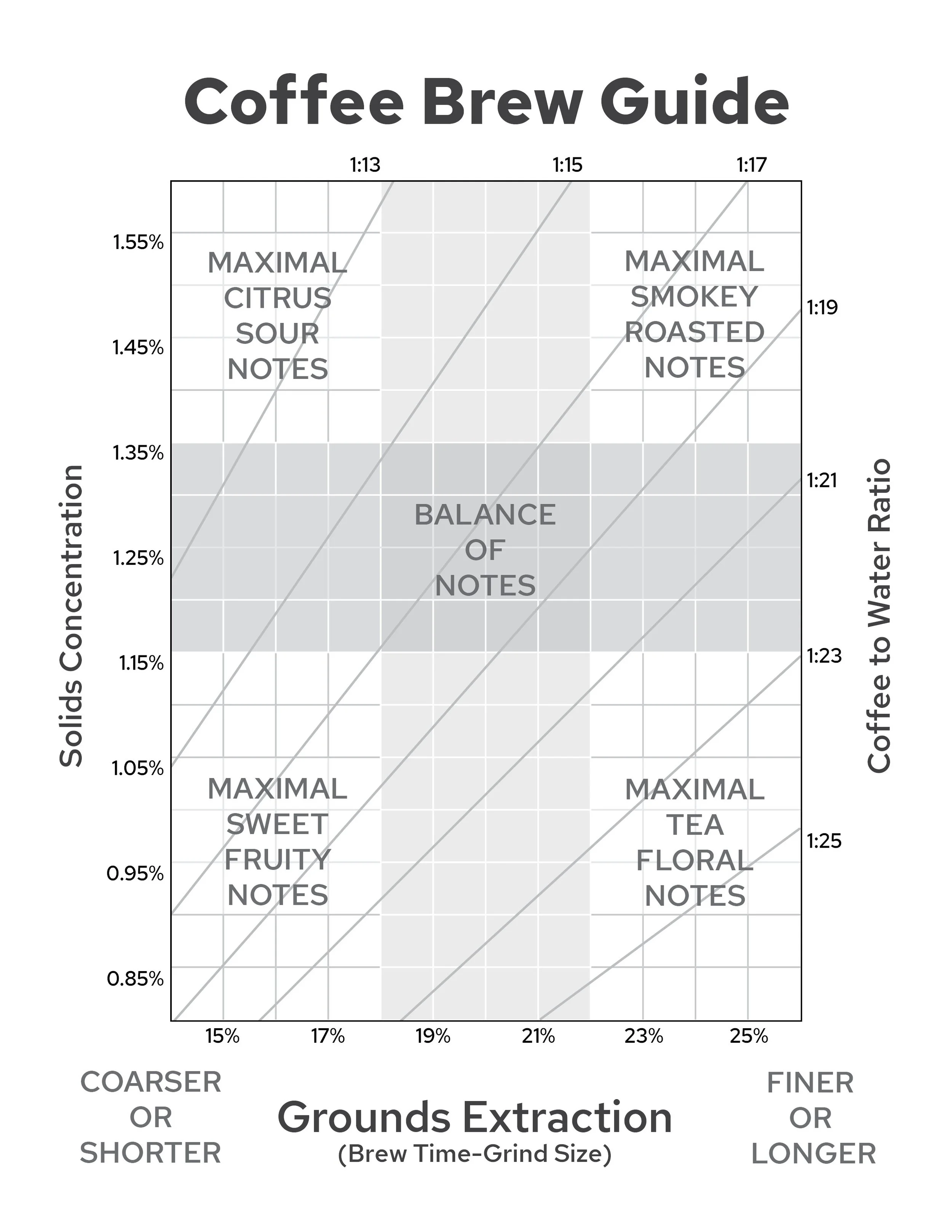
Ratio: A coffee-to-water ratio between 1:15 and 1:20 by weight produces a cup within the standard strength range. The Brew Guide chart maps how ratio and extraction together determine where a cup lands.
Grind: The Grind Size Reference chart shows the particle-size band for each brew method. The middle of the relevant band is the correct starting point; adjustment proceeds from there.
Water temperature: 195–205°F covers nearly all methods. Within this range, temperature is the least influential variable.
Drinking temperature: Flavor perception is fullest between 120°F and 140°F. Above this range, heat suppresses the volatile compounds that distinguish one coffee from another; a cup that tastes flat at 160°F often resolves as it cools.
Reheating: Reheating restarts chemical change in the brewed cup — primarily oxidation and the degradation of acids — and produces a different flavor profile than the one the roast established. The cooling cup is the intended progression.
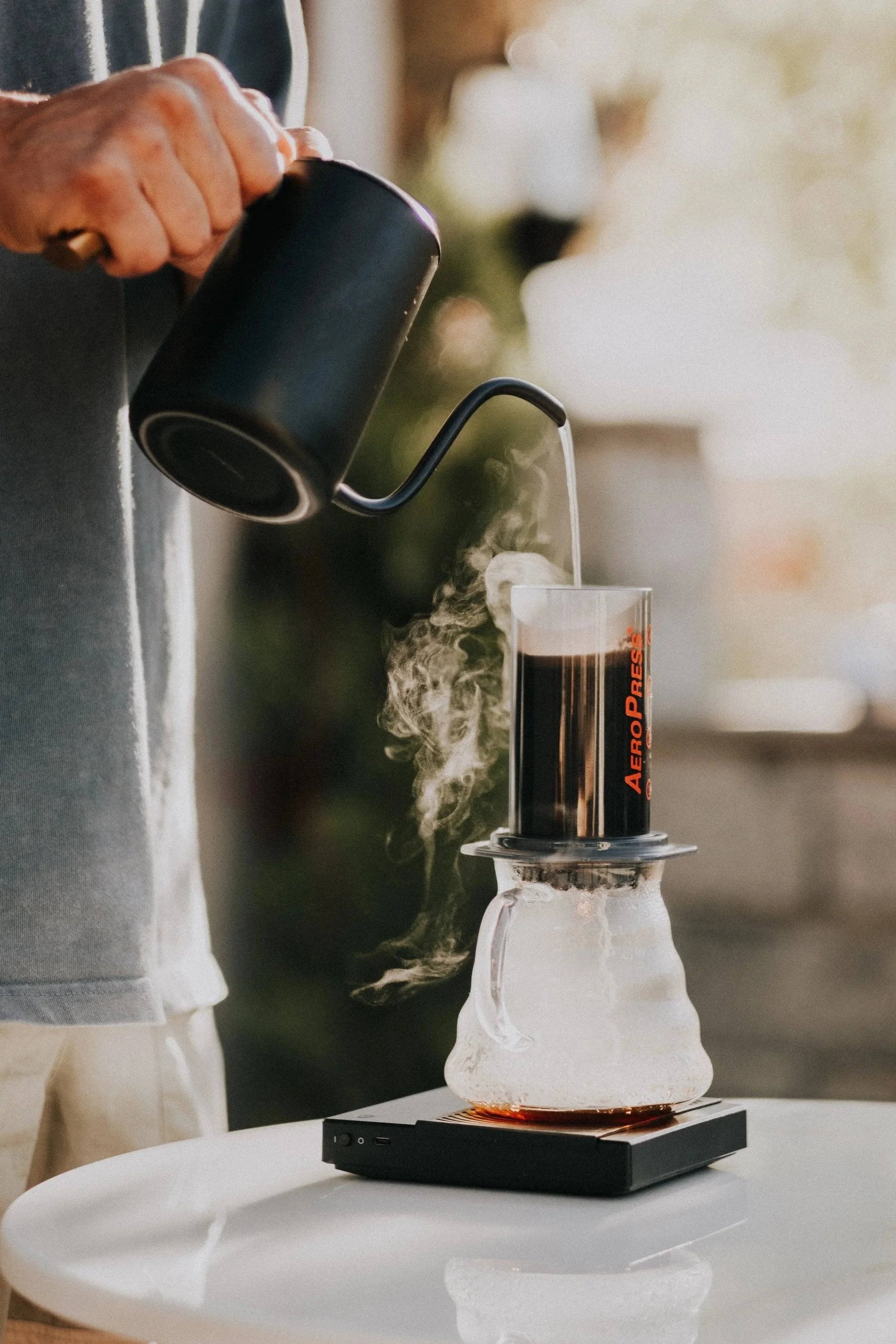
Brewing toward a target works best as a controlled process: brew, taste, locate the result on the Brew Guide, and change one variable before the next brew. The variables, in approximate order of influence: brew method, ratio, grind size, brew time, water temperature.
Preparation can emphasize or suppress the characteristics a coffee already holds. It cannot introduce a flavor the green coffee and the roast did not put there. The ceiling is set before the water is poured.
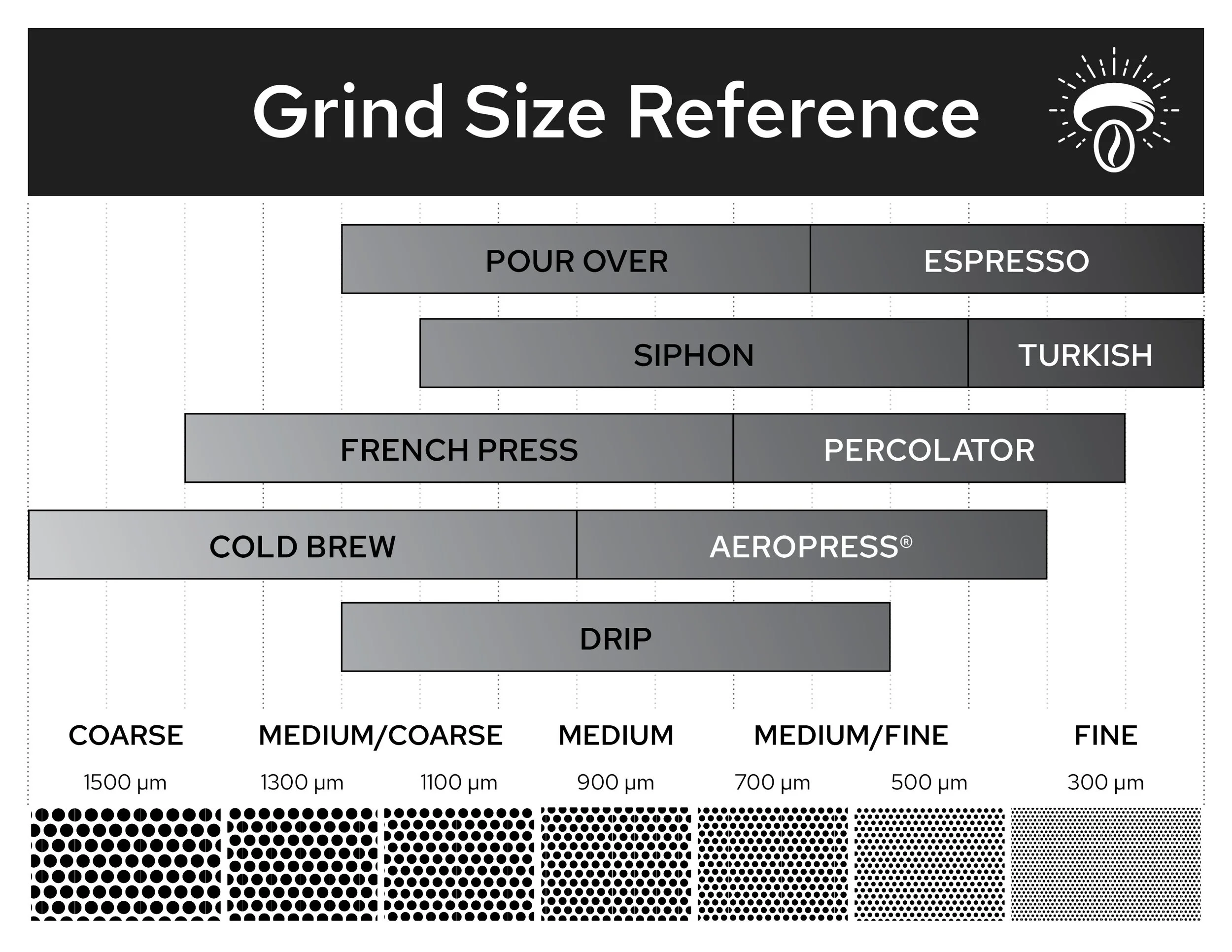
Grind size is selected by method first: choose the brew method, then the corresponding band on the reference chart. Finer grinds extract faster; coarser grinds extract slower. Extraction — the fraction of the dry grounds dissolved into the brew — determines horizontal position on the Brew Guide. Solids concentration, the vertical axis, follows from extraction combined with the brew ratio.