

Taste
Wine holds the popular reputation for complexity. By the count of identified aroma compounds, coffee exceeds it — more than 800 in roasted coffee against roughly 250 in wine.
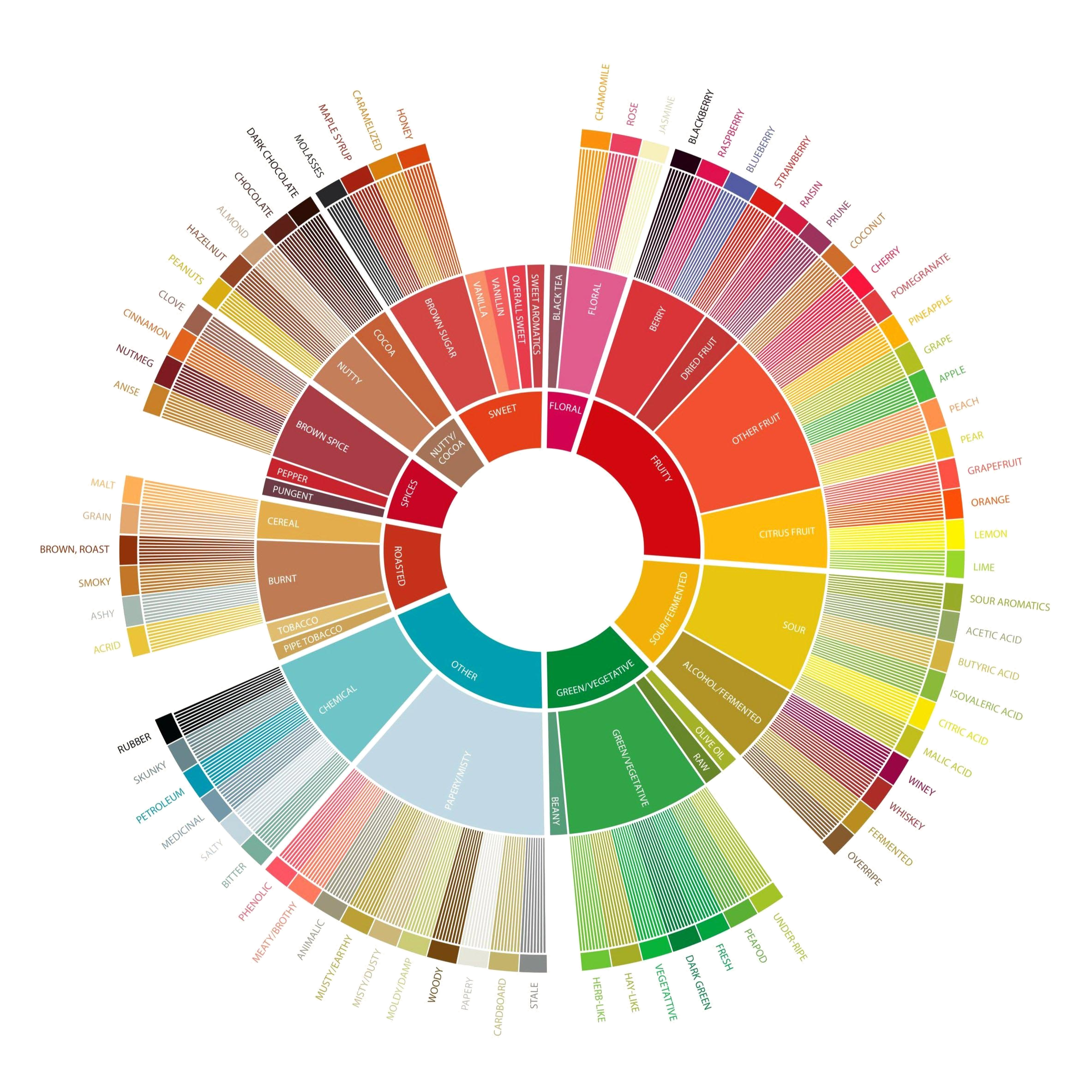
The flavor wheel organizes this complexity into a usable structure: nine primary categories, dividing outward into progressively specific descriptors. Professional graders use it to make flavor observable, comparable, and recordable across lots and across years. It is a vocabulary, not a verdict — the wheel describes what is present in the cup. Which of those qualities a drinker prefers is not a question the wheel answers.
Cupping
Cupping is the standardized method by which roasted coffee is evaluated. Protocols vary in their details across roasters and graders; what matters is consistency — the same procedure, performed the same way, every time, so that differences observed between cups belong to the coffee and not to the method.
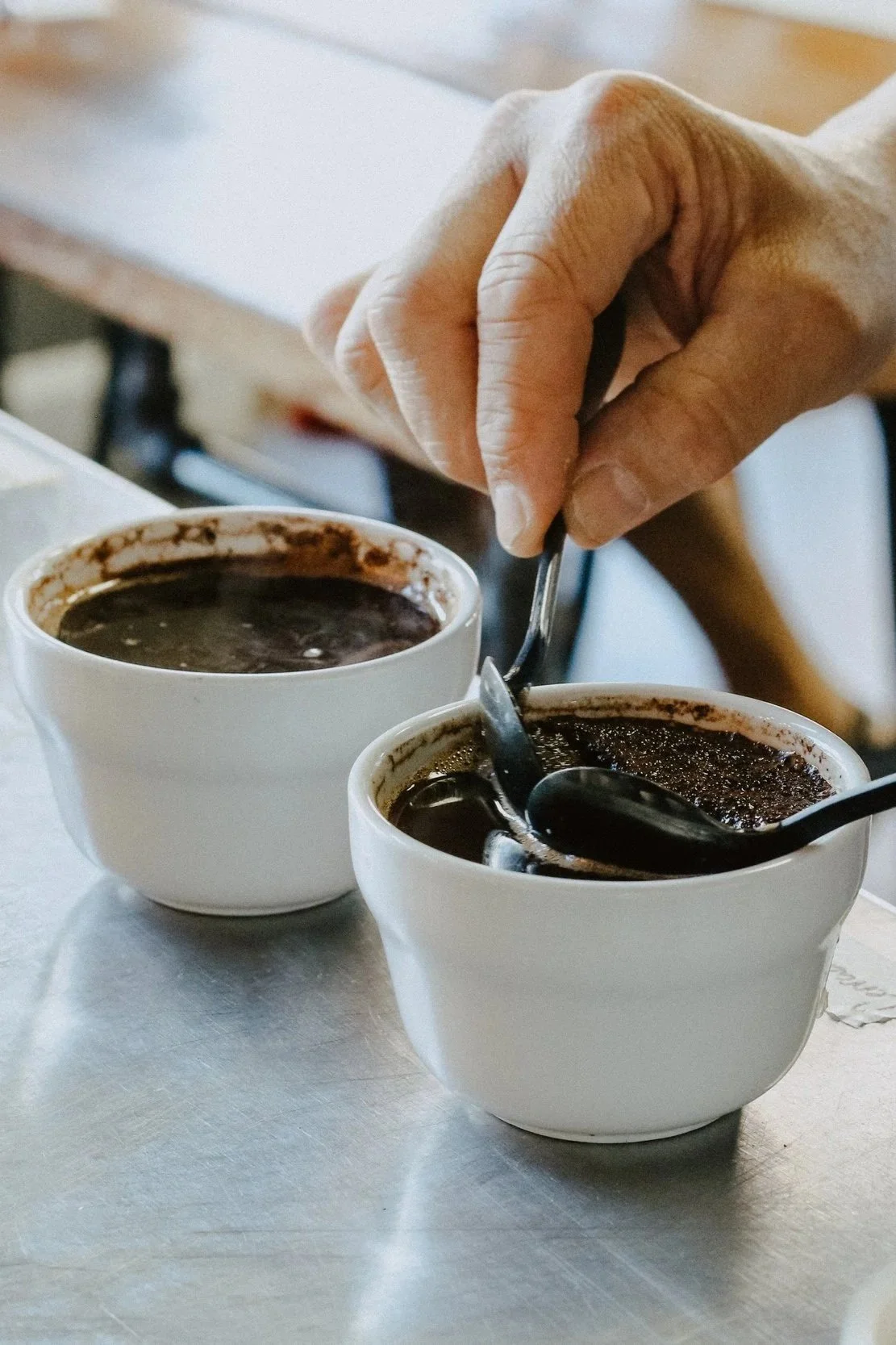
The procedure: A measured dose of coffee is ground into each of three bowls. The dry grounds are evaluated by aroma first. Water just off the boil is added in a measured amount, and the coffee steeps undisturbed — typically four minutes — while a crust of grounds forms at the surface. The crust is broken with a spoon and the aroma released at that moment is evaluated; the remaining grounds are then skimmed off. The liquid is left to cool toward the range where flavor perception is fullest, and each of the three bowls is tasted by spoon, with a rinse bowl used between samples.
Three bowls of the same coffee, rather than one, expose inconsistency: a defect present in one bowl and absent in the others is a fault in the sequence, not in the lot.